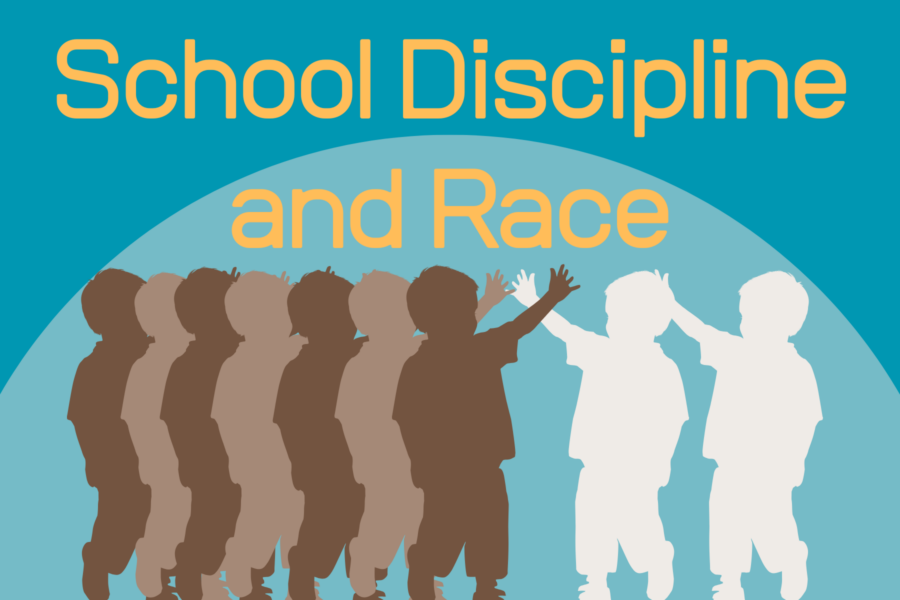
On August 18th, 2026, the U.S. Department of Education (“DOE”) issued an ideologically motivated “school discipline guidance” which claims:
“that neither Title VI nor the Constitution requires the use of race in student discipline and that the use or consideration of race in student discipline violates Title VI and the Constitution absent truly extraordinary circumstances that satisfy strict scrutiny.”
The DOE guidance argues that schools are not legally required to take race into account when evaluating their disciplinary practices. And while a legal guidance does not change the law and has no official legal standing, it is a declaration of intent by the DOE and an attempt at enforcing the Trump administration’s goal: devaluing the civil rights of people of color. As part of these efforts, the DOE engaged in active investigations into school districts, such as in the case of Milwaukee, Wisconsin, where the Department is reviewing “whether Minneapolis-Public-School-District policy requires staff to take race into consideration during disciplinary decisions.” These investigations are an example of political intimidation because they’re meant to punish and scare districts which are acting in accordance with the Civil Rights Act.
The actions of the DOE occur in the shadow of the DOE’s recent rescinding of the Office of Civil Right’s “disparate-impact” regulations which “regulate(d) the disproportionate and often unintentional effects of certain district policies on historically marginalized students.” Disparate-impact regulations were important safeguards against disciplinary policies and practices in schools which, due to institutionalized racism and other forms of discrimination, had harmful outcomes to students of color and other marginalized groups. If a policy or practice in a school or district generated a disproportionately negative impact on a group of students of a particular identity-grouping, the disparate-impact regulations provided a legal basis for the DOE to monitor school districts and order changes in practices.
By pressuring schools and legal institutions to stop taking race into account when assessing the outcomes of their disciplinary practices, the DOE is undoing decades of progress made by legal and social movements, particularly movements towards addressing the ways in which students of color, through disproportionate and racially biased methods of discipline and expulsion, are being funnelled into our country’s prisons.
In the words of our founding partner Rosa K. Hirji, in an article she wrote for the American Bar Association in 2018:
“The school-to-prison pipeline is not a problem that can be compartmentalized. It is deeply intertwined with the mass incarceration of people of color and inequality in our society. Policy solutions are short-lived. Instead, advocates need to respond to the attacks on the very nature of public education and the reversal of federal structures that protect civil rights. Efforts must focus on preserving those rights that are necessary to fight against the school-to-prison pipeline: the right to due process, equality, and a public education.”
A study co-authored by Ramon T. Flores, a graduate student researcher at the Center for Civil Rights Remedies (CCRR) and Daniel J. Losen, former director of CCRR and current senior director of education at the National Center for Youth Law, found that:
“Students across California lost more than half a million days of instruction due to out-of-school suspensions, a slight decline statewide from previous years. Yet the findings describe high rates of punishment that have increased dramatically post-pandemic in particular districts. Despite the slight statewide decline, many districts increased suspensions and show widening racial/ethnic disparities, including two districts that are currently under agreements with a federal civil rights enforcement agency.”A distressing example of this is how African American students in the foster system are disproportionately losing instruction time compared to their peers:
“African American children in the foster system are being denied an opportunity to learn, at a rate of 121 days of lost instruction per 100 enrolled. African American children in these two groups are losing instruction at a rate that is 7 to 12 times higher than the state average for all students (10 days of lost instruction per every 100 students).”
The report also details how schools have attempted to curb and fight against such disparities by reforming their disciplinary cultures. For example, in 2015, LAUSD became the first Californian district to prohibit suspensions in grades K–12 for disruptive behavior or willful defiance, which resulted in LAUSD’s lost-instruction rates declining from 2018–2019 for all students, including African Americans, Latinx, and students with disabilities (IDEA). If LAUSD continues down this considered path, marginalized students in Los Angeles will likely have access to an educational environment which is far less hostile to them.
DOE’s attempt to enforce this ideology is inherently racist: it seeks to undermine civil rights by ignoring the ways in which racial disparities erode them. The reality of racial disproportionality has harmed and will continue to harm the lives of millions of children in this country. They are in urgent need of institutions which advocate for their rights instead of attempting to undermine them. We at Hirji, Chau & Rodriguez LLP will continue to fight for a world where that is the case.
Latest Posts: