
By Theo Meranze
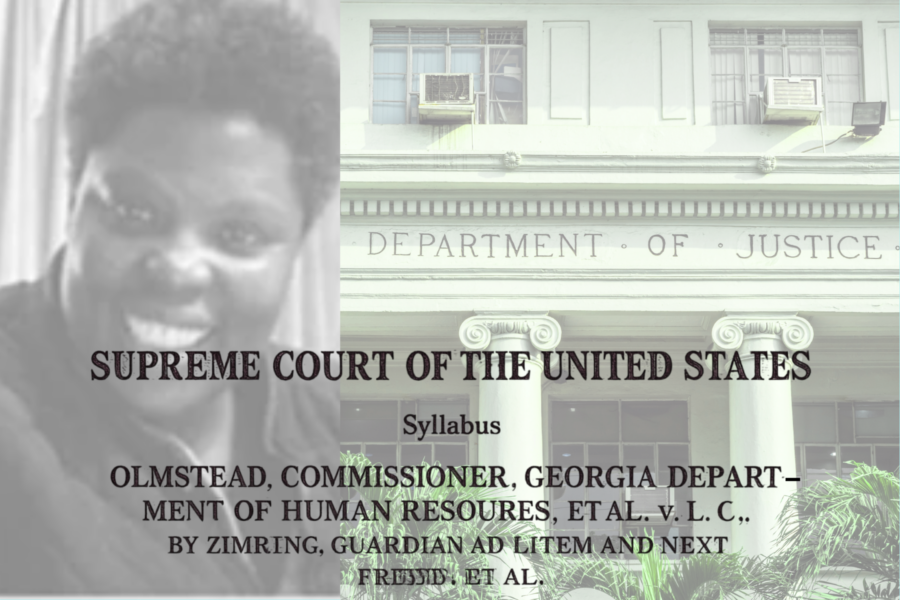
On June 18th the United States Department of Justice (DOJ) issued a controversial opinion regarding the historic Supreme Court decision Olmstead (1999).
In Olmstead, the Supreme Court ruled that “states are required to provide community-based treatment for persons with mental disabilities” when three criteria are met:
- Integration in the community is appropriate
- The affected person does not oppose living in the community
- The provision of services in the community would be a reasonable accommodation when balanced with available resources and other similarly situated individuals with disabilities.
This established unnecessary institutionalization as illegal discrimination under the Americans with Disabilities Act (ADA). Consequently, Olmstead was one of the most important decisions in Disability Rights history, one which legally spearheaded the movement to move people with disabilities out of dehumanizing state-run institutions and into community settings. In the words of the California State Council on Developmental Disabilities, the DOJ’s opinion last week fallaciously argued that:
- The Supreme Court’s Olmstead decision (1999) did NOT actually mandate maximum integration. It only held that unjustified institutionalization can be discrimination, not that states must always prefer community settings. DOJ says courts and agencies over-read Olmstead for 25 years.
- Congress never imposed a universal integration mandate in the text of the Rehab Act or the ADA. The statutes only prohibit discrimination not any institutionalization.
- Federal rules carrying out the “integration mandate” exceed legal authority and should be rescinded. Federal agencies invented this mandate, Congress did not explicitly authorize it.
This dangerous perspective is meant to undermine the legal tradition Olmstead established. If it were to be followed, the opinion would weaken the rights of people with Psychiatric disabilities and people with developmental disabilities in developmental centers, making it harder for them to ensure they will be brought back into their communities. And while, thankfully, opinions issued by the DOJ are not law, they serve as prospective guidelines for federal policy. Therefore, this recent opinion signals incoming legal attempts to attack the Olmstead integration mandate. We at Hirji, Chau & Rodriguez , LLP., reject it wholeheartedly as both a misreading of the law and an attack on this country’s most vulnerable.
Latest Posts: